
iNDX Community Update - May 26 to June 7: updates on paddleNET.earth, Findability Stack Improvements and Practical AI Workflows
paddleNET.earth is live: https://paddlenet.earth/
This update highlights the live paddleNET site, recent improvements to the open-source findability stack, and a few practical ways you can test or adapt the work for your own projects.
This email has a canonical web version optimized for structured reading, retrieval, and citation. View it here:
https://indx.earth/community-summaries/indx-co-update-may-26-june-7/
paddleNET.earth Is Live
paddleNET.earth is now live at https://paddlenet.earth/. The personal identity document (PID) ingestion system is still in development, but the site is ready for review.
Please take a look and send any comments, questions, or rough edges you notice. The networking preview is here: https://paddlenet.earth/graphs/network-sig/
That page shows the direction of the PID-powered networking model. The goal is to make professional discovery and connection much more precise, useful, and context-aware than the networking tools we use today.
I did not have much time over the last two weeks to advance the networking component, but I did make meaningful progress on the broader findability stack.
Findability Stack Improvements
These projects are all open source. You do not need to understand every technical detail to explore them. Download the project, point a desktop AI model at it, and ask:
- What is this?
- How could it be useful to me?
- How would I implement it for my needs and situation?
Personal Identity Document
https://projects.eddiesoehnel.com/adminprojects/personal-identity-document-template-OPEN
I updated the PID template changelog with new sections on attention, applied knowledge, and recommendations. These additions make the PID more useful as a structured personal signal, not just a static profile.
Master Findability Framework for SEO/GEO
https://projects.eddiesoehnel.com/adminprojects/seo-geo-OPEN
I added a short section on email as owned findability infrastructure. Email is not just a distribution channel. It is structured, durable, first-party communication that can support retrieval, summarization, and trust when written clearly.
Website Builder for the AI Era
https://projects.eddiesoehnel.com/adminprojects/structured-website-builder-OPEN
This project received the biggest set of improvements. I made it more general-purpose and added support for items such as CAPTCHA, canonical URLs, Open Graph data, .well-known entries, and other findability-focused website elements.
I also connected it to a knowledge base that builders can use to scan a website against modern best practices. I am starting to see other teams move toward similar website-builder patterns, which is a good signal that what I built is in fact the future of website.
Email System for the AI Era
https://projects.eddiesoehnel.com/adminprojects/email-campaigns-prod-app-OPEN
The biggest improvement here is the telemetry lake. List email data now flows into one place where it can be analyzed over time. That makes it easier to understand what is working, what people engage with, and how email can function as part of a broader findability system.
Free Compute
I have mentioned this before: look for used computers that are too old to run a modern operating system comfortably. They can still be very useful servers.
I put the word out to customers from my dog business about six months ago. People have started giving me old computers, and I am turning them into servers for the infrastructure on my farm. For running projects like the findability stack, older PCs can work very well. See these two beautiful Macs I got last week:
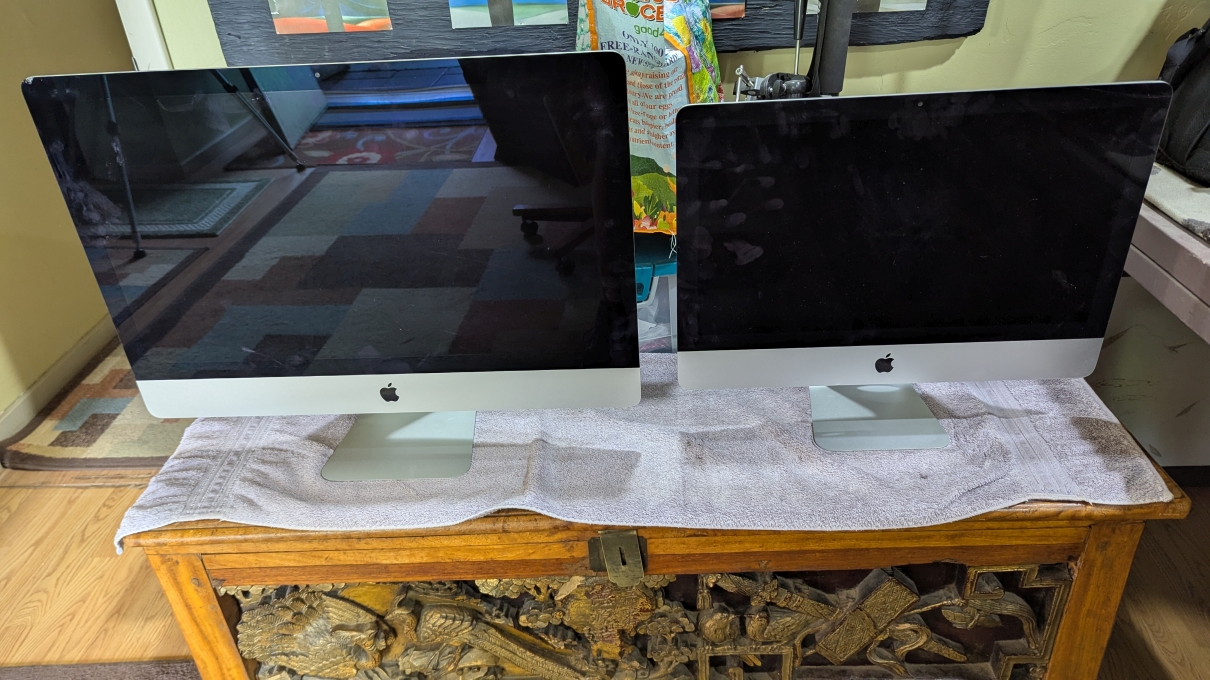
If you have an old machine sitting unused, consider whether it could become a small local server, test environment, or AI-supporting utility box.
Research Tip
Here is a simple research workflow that has been paying off.
Four years ago, I created a dedicated Gmail account and subscribed to list emails from outdoor brands. That account now receives emails from more than 700 brands. Each week, I point an AI model at the inbox and run this skill:
The output shows useful patterns in what brands are doing, what they are not doing, and where their live email strategy differs from their website. Brand emails often reveal current priorities faster than websites do.
You can adapt this idea for yourself. Create a focused inbox, subscribe to relevant organizations, and build a lightweight analysis workflow around the messages.
Findability: Main Category
Why we migrated our marketing site out of a CMS
A strong case for moving marketing sites away from traditional CMS and website platforms so content can be structured more cleanly for AI-era findability, with faster sitewide improvements and more direct control over the publishing system.
https://community.indx.earth/t/why-we-migrated-our-marketing-site-out-of-a-cms/178
https://hendersonmatthew.substack.com/p/why-we-migrated-our-marketing-site
Modern website specifications resource
A useful new resource outlining the technical specifications modern websites should support in the AI era, including an MCP server that lets AI agents reference the specs directly when auditing a site.
https://community.indx.earth/t/modern-website-specifications-resource/177
https://specification.website/
Moving Toward “Agentic Search Optimization”
Agentic Search Optimization is emerging as a useful phrase for the next stage of findability, where visibility depends on how AI agents evaluate brands across structured content, trust signals, citations, technical accessibility, and broader web presence.
https://community.indx.earth/t/moving-toward-agentic-search-optimization/176
https://projects.eddiesoehnel.com/adminprojects/seo-geo
8 GEO metrics to track in 2026
A concise list of emerging generative engine optimization metrics to watch in 2026 as AI search visibility becomes less about classic ranking and more about citations, mentions, answer presence, and AI-driven discovery.
https://community.indx.earth/t/8-geo-metrics-to-track-in-2026/175
https://searchengineland.com/geo-metrics-to-track-476642
Mastering generative engine optimization in 2026: Full guide
A broad GEO guide reinforcing the shift from ranking in Google to being understood, trusted, and cited by AI systems such as ChatGPT, Gemini, Claude, Perplexity, and Google AI Overviews. This guide tracks with the master findability framework at https://projects.eddiesoehnel.com/adminprojects/seo-geo
https://community.indx.earth/t/mastering-generative-engine-optimization-in-2026-full-guide/174
https://searchengineland.com/mastering-generative-engine-optimization-in-2026-full-guide-469142?utm_source=chatgpt.com